
News
Self-sufficiency in circularity
Middle East conflict underscores the importance of national self-sufficiency in circularity
A new coalition agreement, the war in the Middle East, lost capacity due to recent bankruptcies, but also the launch of the Circular Plastics Foundation, Verpact’s Delta Plan for Circular Plastic Packaging, and ongoing innovation in chemical recycling. These are just some of the many developments shaping the circular value chain. Raw material prices are subject to extreme and unpredictable fluctuations due to acute shortages, while Europe continues to import increasing volumes of virgin plastic from Asia. At the same time, the upcoming PPWR legislation (Packaging and Packaging Waste Regulation) is evolving and creating uncertainty, to the detriment of the reusable packaging industry.
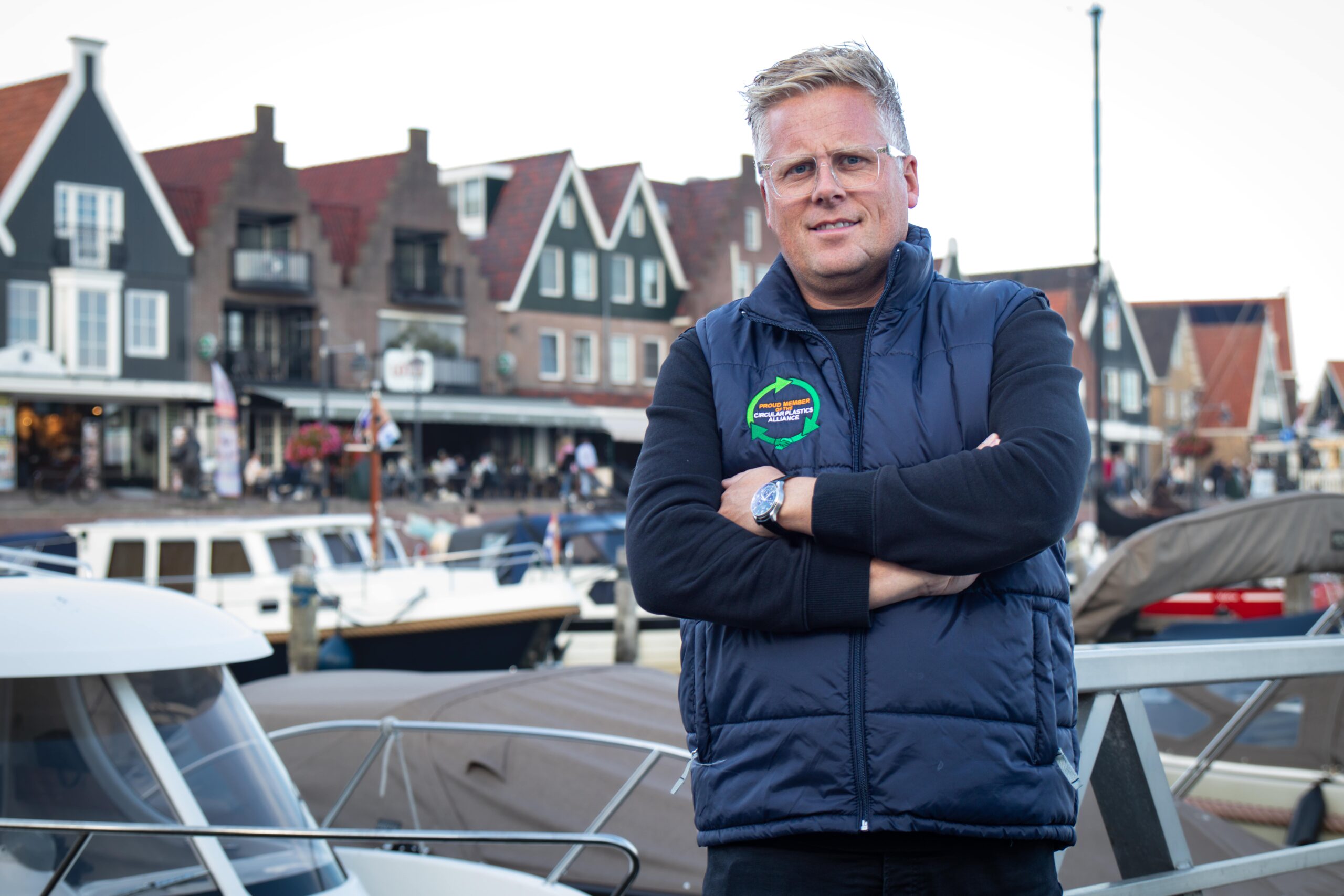
Henk Kras Jr., Director of Circular Plastics Alliance, acknowledges the increasingly pressing situation, while also drawing confidence from positive, albeit small-scale, national sector developments. “The conflict in the Middle East painfully exposes how dependent we are on imported materials, how fragile this chain is, and how important national self-sufficiency in circularity truly is.”
Paradoxically, the current war situation offers a short-term advantage for circular raw materials. Container ships anchored around the Strait of Hormuz and rising oil prices are driving up the cost of virgin plastic from Asia. “However, I expect this to be temporary. Circular packaging, which is on average 40% more expensive, simply cannot compete on price with virgin materials. The illusion that we can fight that battle is long gone. Asian production capacity for new plastics has tripled in just five years. Without mandatory use of European recyclate and import levies on Asian materials, companies will continue to choose the cheaper, non-sustainable option.”
No new projects, but scalable ones
Kras sees a fresh political momentum with the new coalition in The Hague. The coalition agreement outlines ambitions such as a fully circular economy by 2050, a 50% reduction in primary raw materials, a government acting as a launching customer, and minimum recyclate requirements for companies. However, concrete strategies and hard targets are still lacking. “Recently, I spoke with several members of the new coalition at an event. They gave me the impression they had done their homework and were taking these topics seriously. The circular sector can act as a partner to help guide them in the right direction. Someone recently said: ‘The Netherlands excels in innovation but falls short in scalability.’ The sector benefits from financial and political support for proven projects, projects that are practically scalable. We should not try to reinvent the wheel.”
Kras continues: “As long as recyclate requirements are not yet legally enforced, imports are not curbed through tariffs, and government deadlines towards PPWR 2030 remain unclear, the sector remains in survival mode. The EU export ban to non-OECD countries, effective from November 2026, adds further pressure on circular capacity. This comes at a time when capacity is already declining due to bankruptcies, while significantly more capacity will be needed towards 2030. The financial value of plastic waste streams is under increasing pressure due to declining returns for circular plastics. The next step is incineration.”
Circular Plastics Foundation launches in Q2
From a policy and collaboration perspective, the establishment of the Circular Plastics Foundation is a positive development. Together with value chain partners and the Province of North Holland, the foundation aims to connect companies and working groups at both provincial and national levels, and to support scalable initiatives. The foundation is expected to become operational in early Q2.
“The Province of North Holland is providing a workable budget for the next three years,” Kras explains. “With this budget, we are creating room for four new colleagues from our partners at K+V, who will organize program lines, ‘plastic tables’ for working groups, and provincial and national consultations. If this concept proves successful, it could serve as a flywheel for collaboration across other parts of Europe.”
Verpact’s Delta Plan is another initiative where semi-public bodies and the private sector come together to support breakthrough projects in circularity. The Delta Plan serves as a bridge, bringing supply and demand for circular plastics together within a single framework. Given the sharp decline in circular plastic production due to bankruptcies, withdrawn investments in innovative recycling technologies, and unstable prices for European recyclate, the Delta Plan can act as a matchmaker to help close financial gaps in a turbulent sector. Tariff differentiation, rewarding companies that choose European recyclate, also plays an important role.
Legislation and certainty towards 2030
Would you like to find out more about our Circular Plastics Alliance?
If you have any questions, want to make a comment or find our more. please contact us.

